---
**254nm Shortwave UV Display Light — 36 LED with Dichroic Filter!**
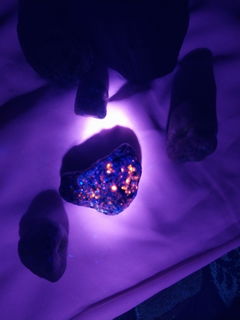
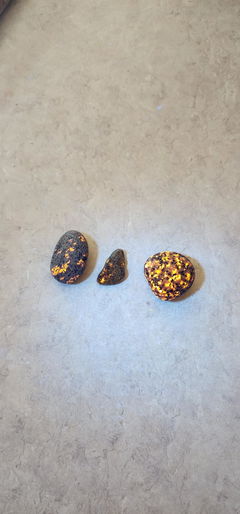
The waveband that built fluorescent mineral collecting. This is the shortwave member of our display light family — same 36-LED fan-cooled build as our 365nm longwave and 310nm midwave lights — running at 254nm shortwave UV (UVC) behind a dichroic filter. Shortwave is where the most famous fluorescent responses on Earth live: the red-and-green fireworks of Franklin and Sterling Hill, New Jersey, scheelite's blue-white blaze, autunite's electric green. Most of those minerals barely shrug under a 365nm light. Under 254nm, they detonate with color. If you collect fluorescent minerals and you don't own a shortwave light, you are missing the main event.
**Why 254nm shortwave?** Fluorescence is waveband-specific — a mineral absorbs UV energy and re-emits it as visible light, and which color you get depends on the wavelength doing the exciting. Shortwave carries the most energy of the three collecting wavebands, and it excites activators that longwave can't reach at all. That's why the classic fluorescent localities — Franklin, Sterling Hill, the great scheelite and uranium districts — are shortwave shows. The dichroic filter passes the 254nm UV and blocks visible light spill, so what you see is pure fluorescence, not lamp glare.
**Minerals that respond to shortwave (254nm) UV — the classics:**
- **Willemite** — intense green; with calcite, the legendary Franklin/Sterling Hill red-and-green combination
- **Calcite** — red to pink at Franklin and many other localities
- **Hardystonite** — violet-blue (Franklin)
- **Esperite** — bright yellow (Franklin)
- **Clinohedrite** — orange (Franklin)
- **Hydrozincite** — bright blue-white
- **Scheelite** — blue-white; shortwave is its best band, the prospector's classic
- **Autunite** — strong green (radioactive — handle and store with appropriate care)
- **Hyalite opal** — green
- **Aragonite** — white to pinkish, often phosphorescent
- **Wollastonite** — orange to yellow-orange at its famous localities
- **Fluorite** — blue-violet on many pieces
- **Agate and chalcedony** — greenish surface fluorescence
Every specimen reacts a little differently, and locality matters — a willemite from Franklin and a willemite from Arizona are two different shows. Run this light next to our 365nm and 310nm display lights and you'll see three completely different responses from the same cabinet.
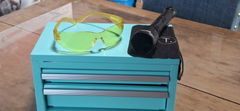
**The light itself:** Thirty-six 254nm LEDs in a 6x6 array, each in its own reflector, behind a dichroic filter. A DC brushless fan and a finned aluminum heatsink keep it cool through long display sessions. The steel yoke handle adjusts with star knobs so you can aim it and lock it, and it runs on a standard US plug. It's the same light I use in my shop and at gem shows, now in shortwave.
**Details:**
- 254nm shortwave UV (UVC) display light
- 36 LEDs in a 6x6 array with individual reflectors
- Dichroic filter — passes 254nm UV, blocks visible light spill
- Fan-cooled: DC brushless fan + finned aluminum heatsink
- Adjustable steel yoke handle with star knobs
- Standard US plug
- 6.5 x 6.5 x 4 inches; weighs 1 pound 12 ounces
- 1-year warranty
- Completes the set with our 365nm (ZWB2) and 310nm midwave display lights — all three wavebands, every response a specimen has
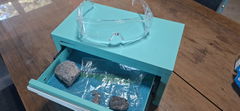
**Safety — please read, this one matters most:** 254nm is UVC, the strongest of the three collecting wavebands, and it can burn skin and seriously damage eyes quickly. NEVER look directly into the lit lamp, ALWAYS wear UV-blocking safety glasses (or a face shield) while it's on, keep it off skin, and never let children use it or be in the room with it unprotected. Aim it at the specimens, enjoy the show from behind your glasses, and switch it off when you're done. Respected, it's the greatest light in the hobby — just respect it every single time.
**Care:** Wipe the filter glass with a soft, dry cloth. Run it in a ventilated spot so the fan can do its job, and store it dry.
---
That's the full three-waveband family now — 365, 310, and 254, all written to cross-sell each other.